Mission hivernale au Sénégal
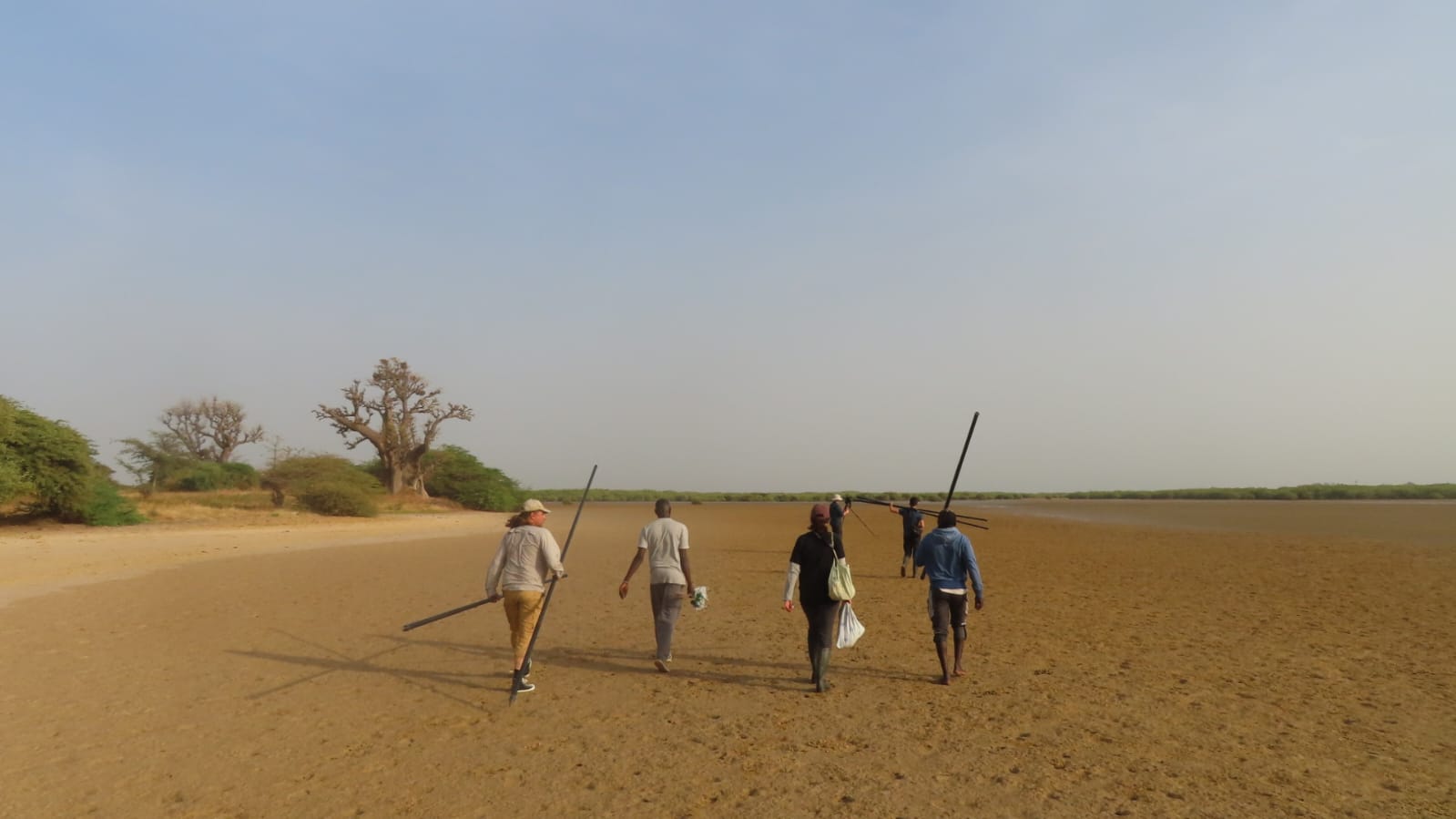
Cet hiver, notre équipe est partie pour trois semaines au Sénégal, avec des départs depuis la France (Pierrick, Fanny, Julie et Jimmy) et depuis la Finlande (choc thermique pour Tuomas). Nous avons été accueillis par les gardes locaux, d’abord dans le Delta du Saloum, puis dans le célèbre Parc National des Oiseaux du Djoudj, à la frontière avec la Mauritanie.
Un grand merci en particulier à Idrissa Ndiaye et Abdou Ndiaye, qui nous ont accompagnés tout au long de cette aventure, et qui ont découvert le baguage à nos côtés.
L’objectif de la mission : équiper de balises GPS un grand nombre de limicoles et de sarcelles d’été, qui sont peu présents chez nous en hiver.
Le terrain était exigeant : chaleur, vase, immensité des habitats… Nous avons aussi découvert l’Harmattan, un alizé continental qui nous a apporté des jours entiers de tempêtes de sable ! Pas idéal pour les observations et les captures au filet…
Mais notre terrain quotidien au milieu des milliers de flamants roses, pélicans et dendrocygnes est inoubliable. Nous avons exploré des rizières immenses, des petites mares reculées, des lacs à perte de vue…Et même un drôle d’étang, au taux de salinité surprenant, que nous avons surnommé « La Petite Camargue », avec ses eaux rosées et ses croûtes de sel. Heureusement, les crocodiles ne fréquentent pas ce genre de point d’eau (du moins, paraît-il !), contrairement aux limicoles !
En revanche, les sarcelles d’été, pourtant bien nombreuses, ont boudé les kilos de riz que nous leur avons apportés, et aucune n’a bien voulu visiter nos différents pièges. Nous espérons que nos collègues auront plus de chance cet hiver au Tchad et en Mauritanie !
Si le bilan est en dessous de nos attentes en termes de captures, mais il reste très positif :
- 3 femelles de combattant varié
- 7 chevaliers arlequins
- 14 chevaliers gambette équipés de GPS.
Certains sont remontés en Europe dès le printemps, nous fournissant de précieuses données sur la fin d’hivernage, la migration pré-nuptiale et même parfois la reproduction en Europe du Nord. Ces individus viennent compléter le jeu de données maintenant très conséquent du projet Habitrack, essentiel pour la conservation des habitats des oiseaux vulnérables à l’échelle européenne. Ils permettent aussi d’améliorer les connaissances locales, comme au parc du Djoudj par exemple.
Encore bravo à l’équipe de terrain et merci aux ornithologues qui nous ont accueillis sur place et qui ont rendu ces captures possibles !
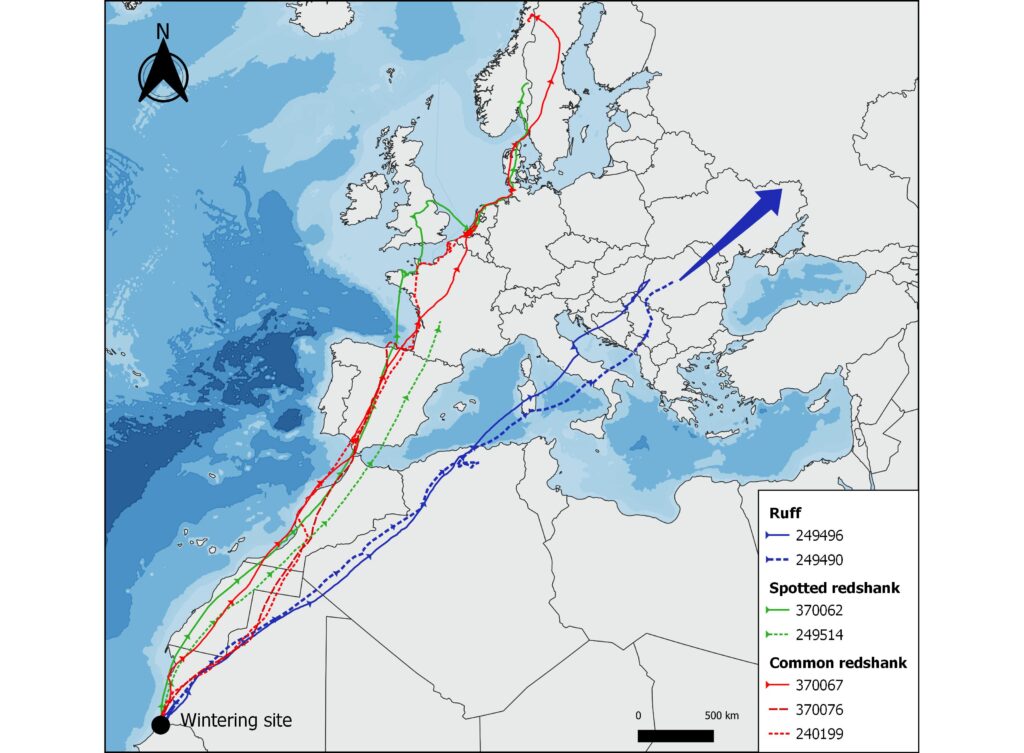
Migration pré-nuptiale des limicoles capturés au Sénégal entre leur quartier d’hivernage et leur zone de reproduction en Russie ou Scandinavie


